
Your pool, our expertise.
Helping you keep your pool and spa clean, balanced and ready to enjoy.

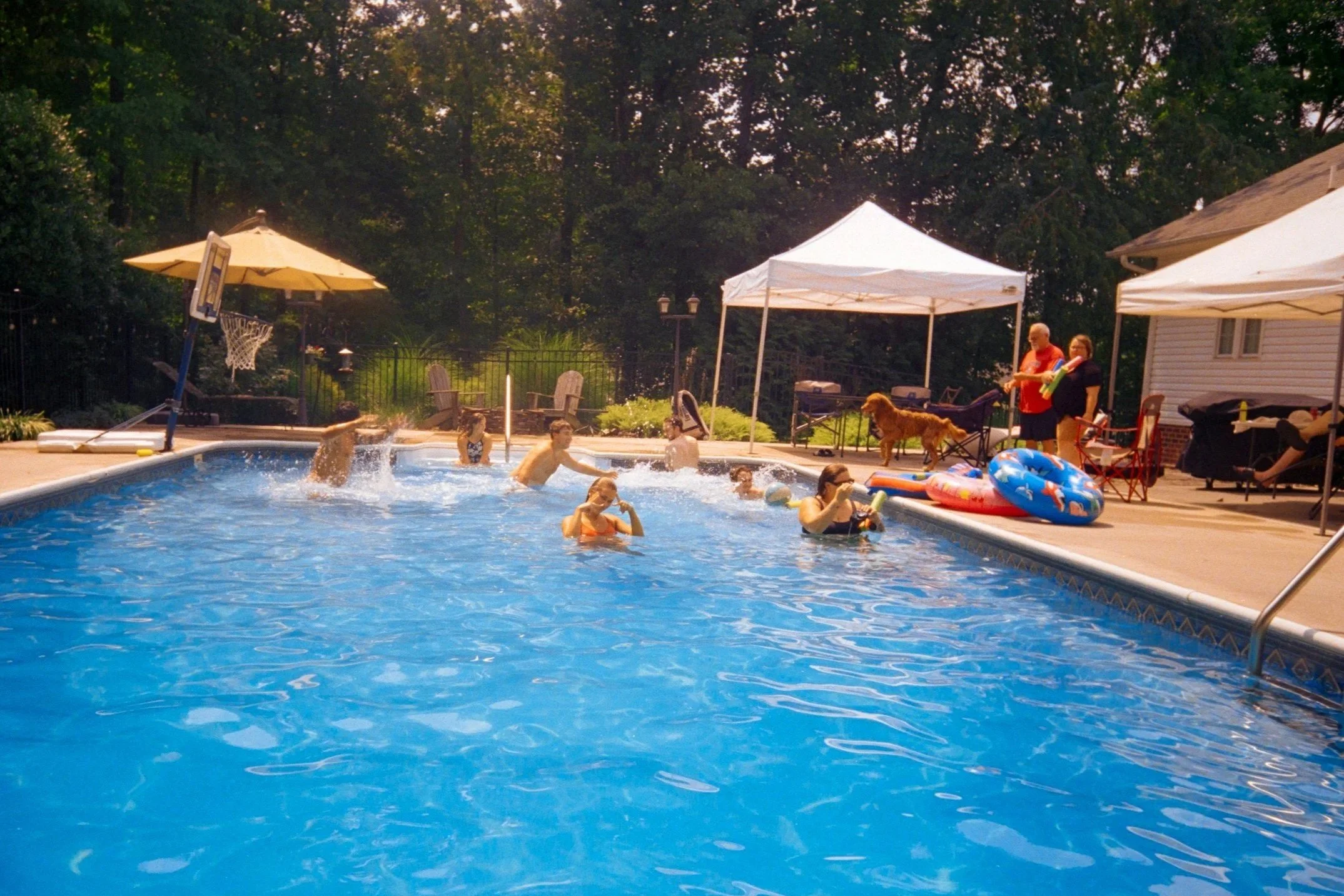
Getting great pool water doesn't have to be complicated.
Whether you're setting up a new pool or spa, trying to solve a water-quality problem or simply want to feel more confident looking after your pool, we're here to help.
You don't need to be a chemist to understand your water. Our expertise helps you make sense of your test results, understand what your pool actually needs and avoid unnecessary treatments — saving you time, money and frustration.
Test your water. Understand the results. Choose the right treatment.
Keep your pool in balance.
Our process, step by step.
-
![]()
1. Test your water. Start here
Before adding chemicals, find out what’s actually happening in your pool or spa. Bring us a water sample and we’ll test it and help you understand the results.
-
![]()
2. Choose the right treatment. Know what your water needs
Once you understand your results, you can choose the right chemicals and treatment for your pool. We’ll help you avoid adding products you don’t need and make sure you’re treating the cause, not just the symptoms.
-
![]()
3. Get help.
Pool water doesn’t always behave the way you expect. If your pool is green, cloudy, foamy, losing chlorine or simply won’t stay balanced, talk to us. We can help you understand what’s happening and work out the next step.

Curious about Pool Chemistry?
Pool chemistry doesn't have to be complicated. We test a range of key measurements to understand what's happening in your water.
-
Chlorine is your pool’s main sanitiser. It works to kill bacteria and control algae and other contaminants introduced into the water.
Too little chlorine can allow bacteria and algae to grow. Too much can cause strong smells, irritation and unnecessary chemical use.
Think of chlorine as: the thing that keeps your pool water clean and sanitised
-
pH tells us how acidic or alkaline your pool water is. It has a big effect on how well chlorine works and how comfortable the water is for swimmers.
If pH is too high, chlorine becomes less effective and you can get cloudy water or scale. If it is too low, the water can become corrosive and may irritate swimmers and damage equipment.
Think of pH as: the main control point for your pool's water balance
-
Total alkalinity helps your pool resist changes in pH. It acts a bit like a buffer, helping prevent your pH from constantly moving up and down.
If alkalinity is too low, pH can become difficult to control. If it's too high, pH can tend to drift upward and become harder to adjust.
Think of alkalinity as: the thing that helps keep your pH steady
-
Hardness measures the amount of dissolved minerals, mainly calcium and magnesium, in your pool water.
If hardness is too low, the water can become aggressive and may draw minerals from pool surfaces and equipment. If it's too high, minerals can come out of the water and contribute to scale or cloudy water.
The right level depends on your pool and water-treatment system, which is why we look at hardness alongside the other results.
Think of hardness as: helping make sure your water isn't too aggressive or too scale-forming.
-
The Langelier Saturation Index (LSI) brings several measurements together — including pH, temperature, alkalinity and calcium hardness — to give us an indication of whether your water is balanced, likely to form scale, or potentially corrosive.
This is useful because the individual numbers don't always tell the whole story. Water can look fine when you look at one measurement, but the overall balance can tell us something different.
Think of LSI as: the bigger picture of your water balance.
You don't normally adjust LSI directly. Instead, we look at the factors that influence it.ription
-
Dissolved solids are the substances that have accumulated in your pool water over time. These can come from chemicals, source water, swimmers, dust and other contaminants.
Conductivity gives us an indication of how much dissolved material is present in the water. As dissolved solids build up, conductivity generally increases.
High levels don't necessarily mean your pool is unsafe, but they can indicate that the water is becoming increasingly loaded with dissolved material and may benefit from dilution or fresh water.
Think of dissolved solids and conductivity as: a measure of what's building up in your water
Need Some Advice?
We're here to help. Lean on our friendly team and over 40 years of experience.
Get in touch — we're happy to help